
The Halloween House-Hunting Checklist: How to Buy the House That Owns October
Tucson Real Estate for Real People
The Halloween House-Hunting Checklist: How to Buy the House That Owns October
Ten things to check during your inspection period, while you still have an out.
By Jennifer Winchester · October 1st 2026 · About a 9 minute read
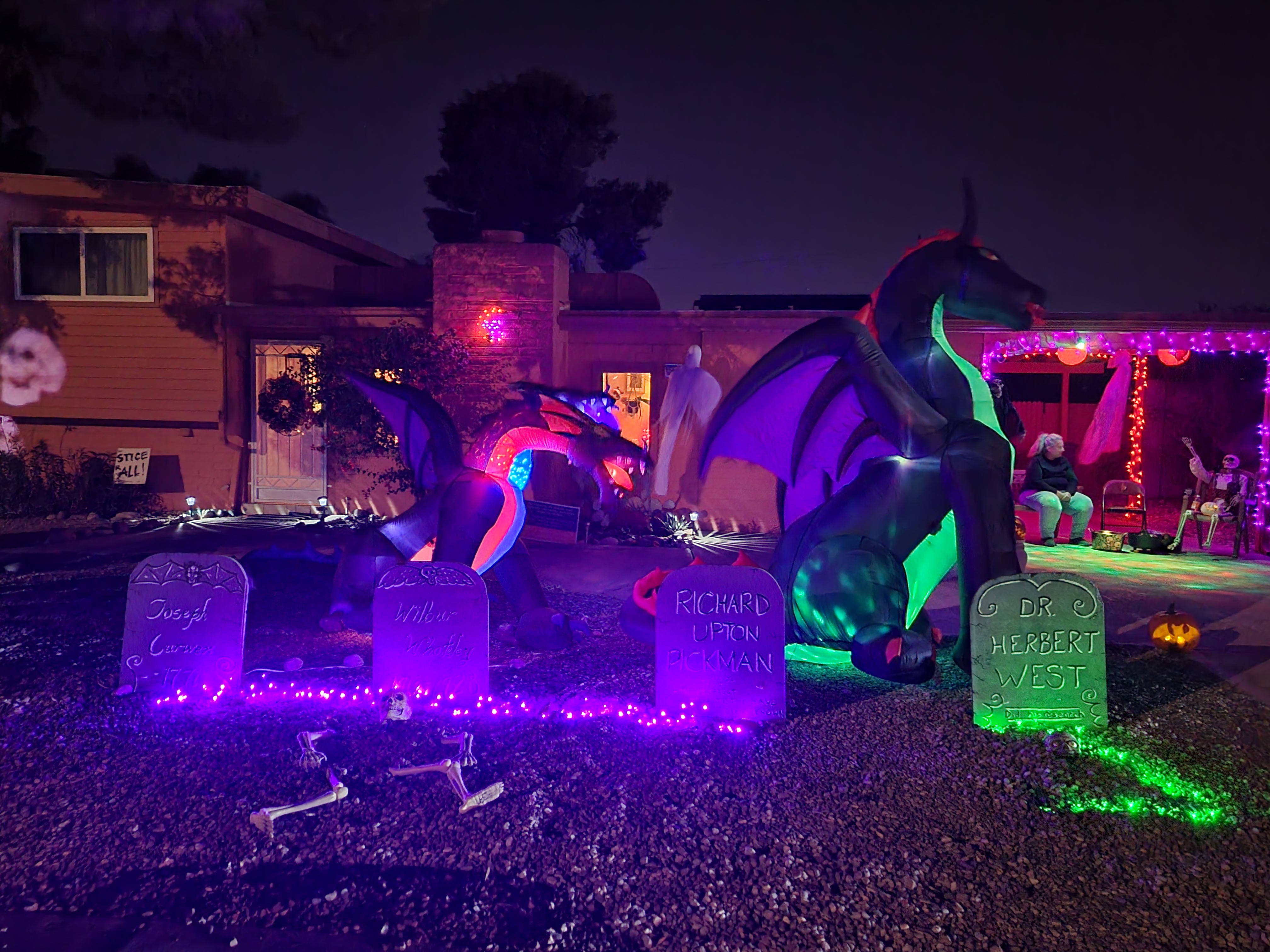
There's a particular flavor of heartbreak that hits around 7:15pm on October 31st, when you're sitting on your new front step with four pounds of full-size candy bars and you've seen exactly two trick-or-treaters. One of them was your neighbor's kid, sixteen, in a hoodie, fully committed to the bit that he was "a guy." You gave him three bars because he came out.
You bought a house. You did not buy the house.
Here's the thing nobody tells you during the buying process: whether you get to be the Halloween house is largely decided before you ever unpack a fog machine. It's decided by setback, sightlines, outlet placement, soil composition, and whether your HOA has opinions about inflatables. All of which are things you can check during your inspection period, while you still have an out.
So if you're house hunting this fall and you have ambitions, here's what to actually look at.
1. Can anyone see your front door from the street?
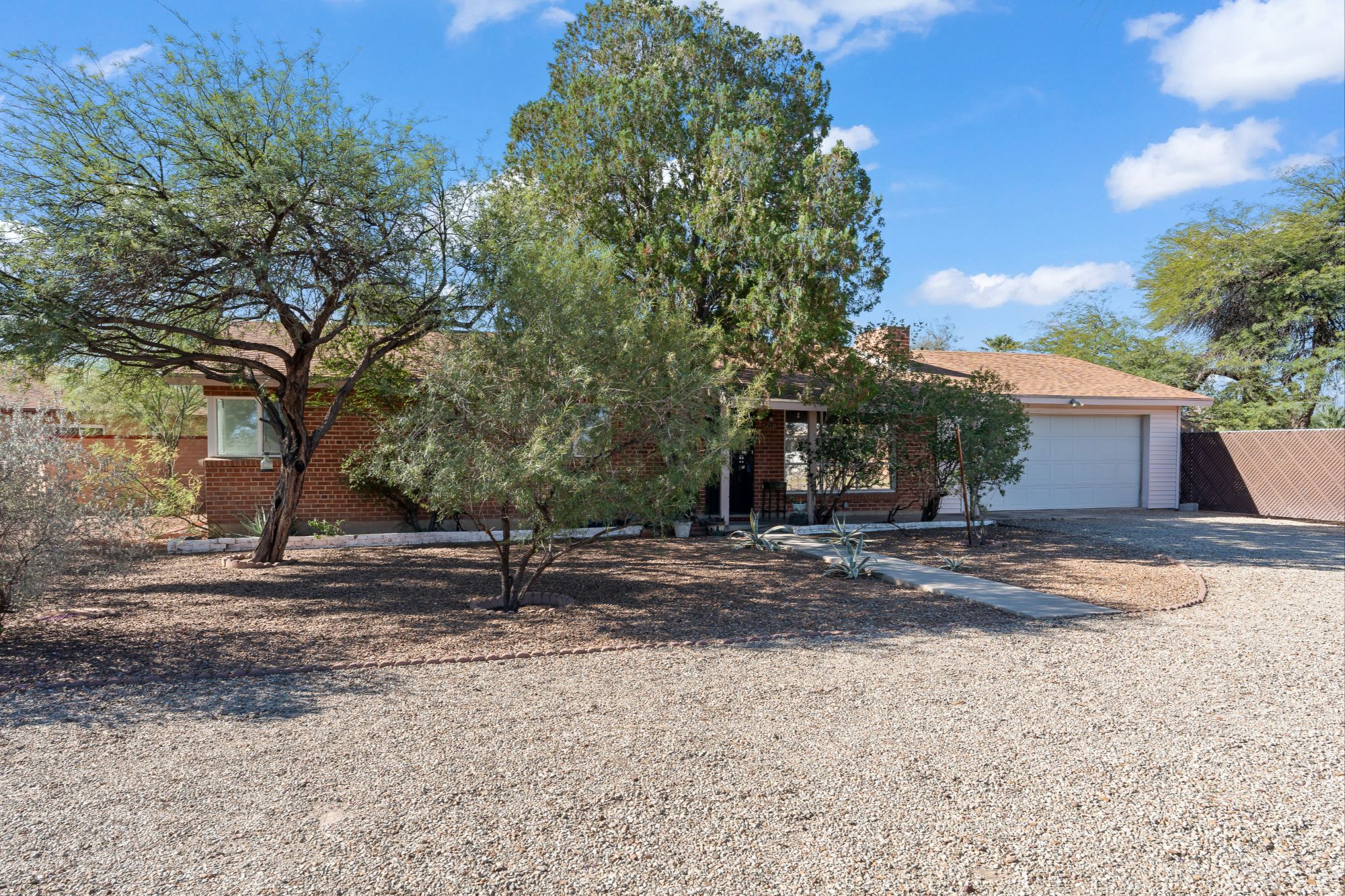
Walk to the curb. Stand there. Look at the house.
If the entry is tucked behind a wall, set back sixty feet down a gravel drive, or angled sideways so the front door faces the side yard — congratulations, you have purchased a house that no ten-year-old will ever risk. Kids run a cost-benefit analysis on every driveway. Long, dark, ambiguous approach with no visible door? They skip you. They're not wrong to.
Here's the good news: this one is fixable, and it's the reason I'm not telling you to walk away from a setback house.
If the door is buried but there's any spot out front with a clean line to the street, that's your candy station. A folding table at the end of the walk. A chair at the top of the drive. A canopy near the curb with a light on it. Kids aren't coming for your door — they're coming for the person holding the bowl. Put yourself somewhere visible and the setback stops mattering.
Just go in knowing you're hauling a table out every year instead of sitting on your own step. That's a real trade, not a dealbreaker.
And curb appeal is still resale value. A house whose front door you can't find from the street is a house that shows badly.
2. Is there a porch, or somewhere that could be one?
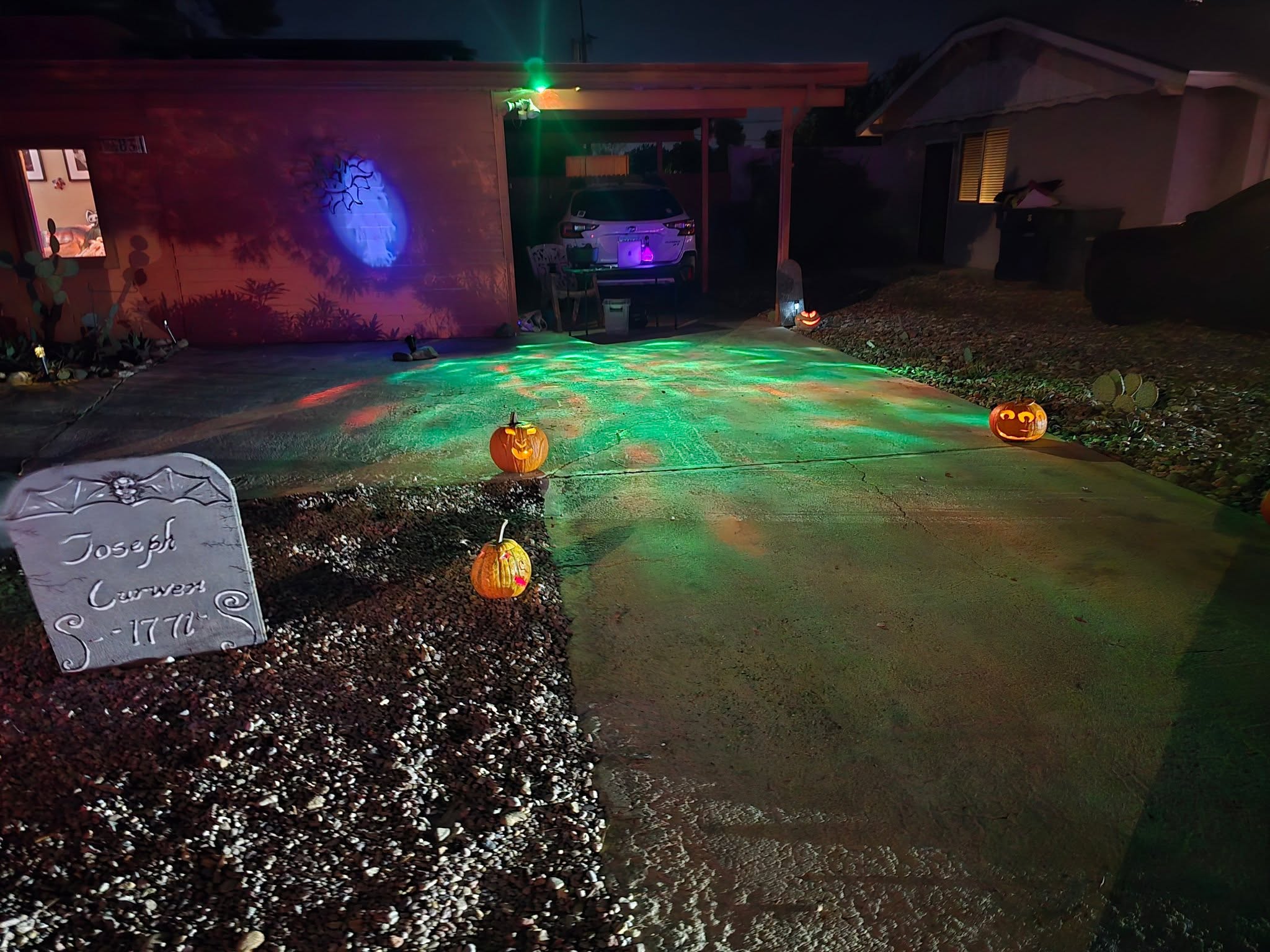
A covered entry gives you a staging area — a place for the candy table, the animatronic, the chair you're going to sit in with a beer. It also gives you shade on your front door, which in Tucson is not a small thing.
No porch is not the end of it. Look at what else is out front. A carport is a genuinely good setup: pull the car deep in, or park it on the street for the night, and you've got a roof, shade, usually an outlet, and enough square footage to do something ambitious. A deep overhang, a ramada, the shaded side of the garage — all workable. A pop-up canopy covers the rest.
What you're looking for is a coverable spot with a sightline to the street. That's the actual requirement. The porch is just the most common way to get one.
If there's genuinely nothing and you want a real entry built, that's a permit-and-budget conversation. Know the number before you close, not after.
3. Sidewalks and street lighting
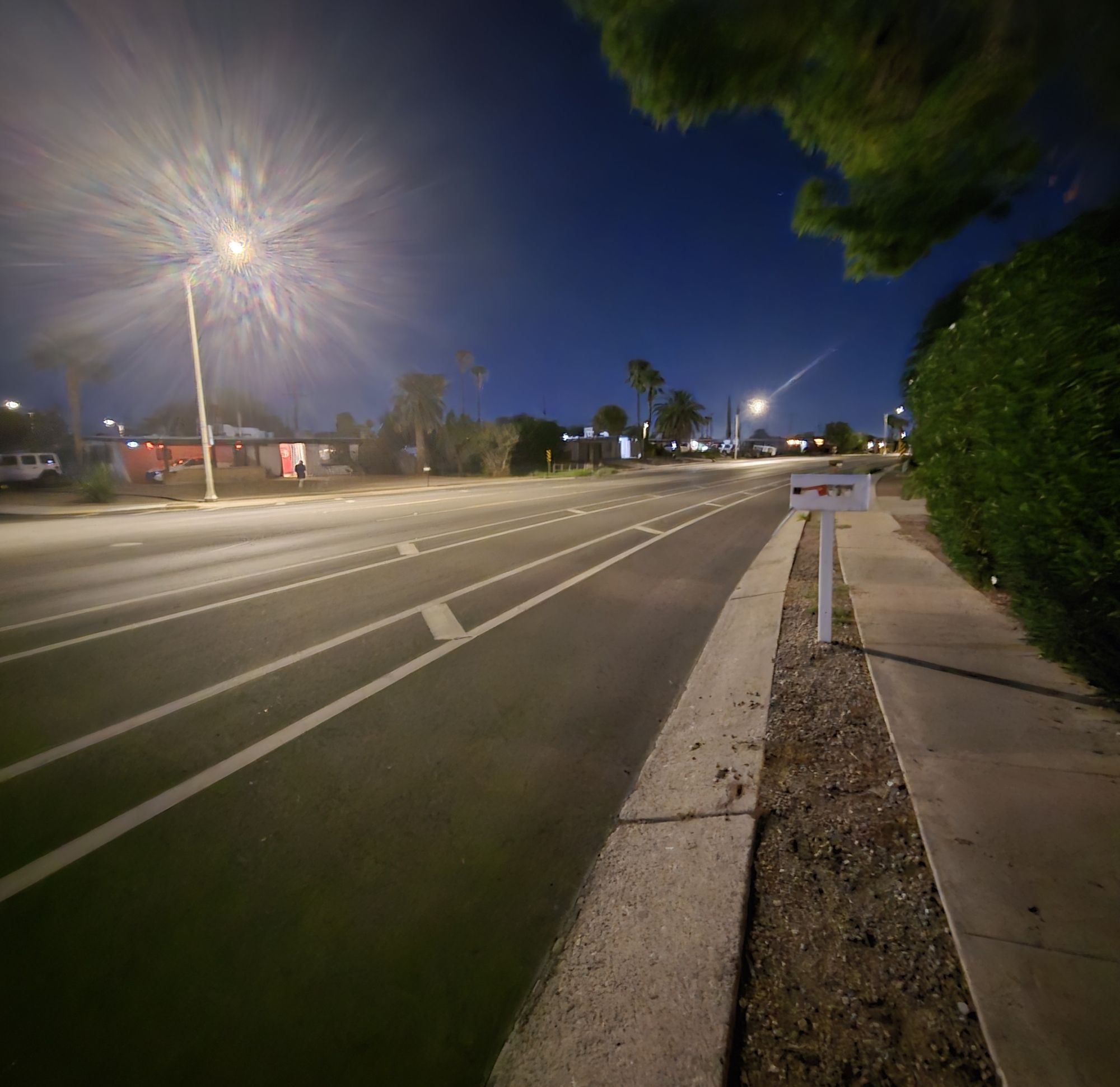
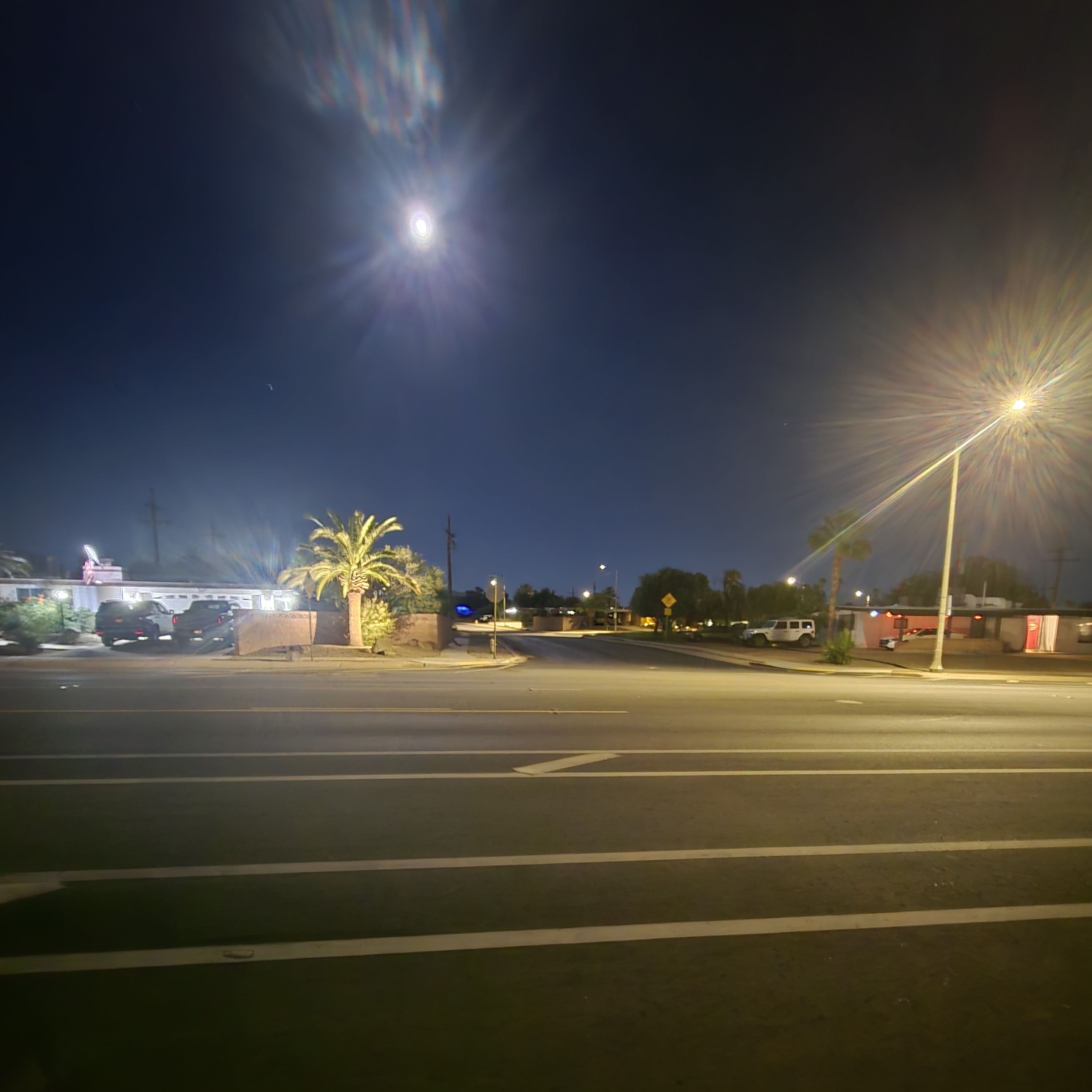
Don't take my word for this, and don't take the listing's. Go stand on the block at night. Walk it. Some blocks have continuous sidewalks and working streetlights. Some have neither, and a curb that disappears halfway down. Kids and their exhausted parents route around the second kind.
4. Count the exterior outlets. Then find the panel.
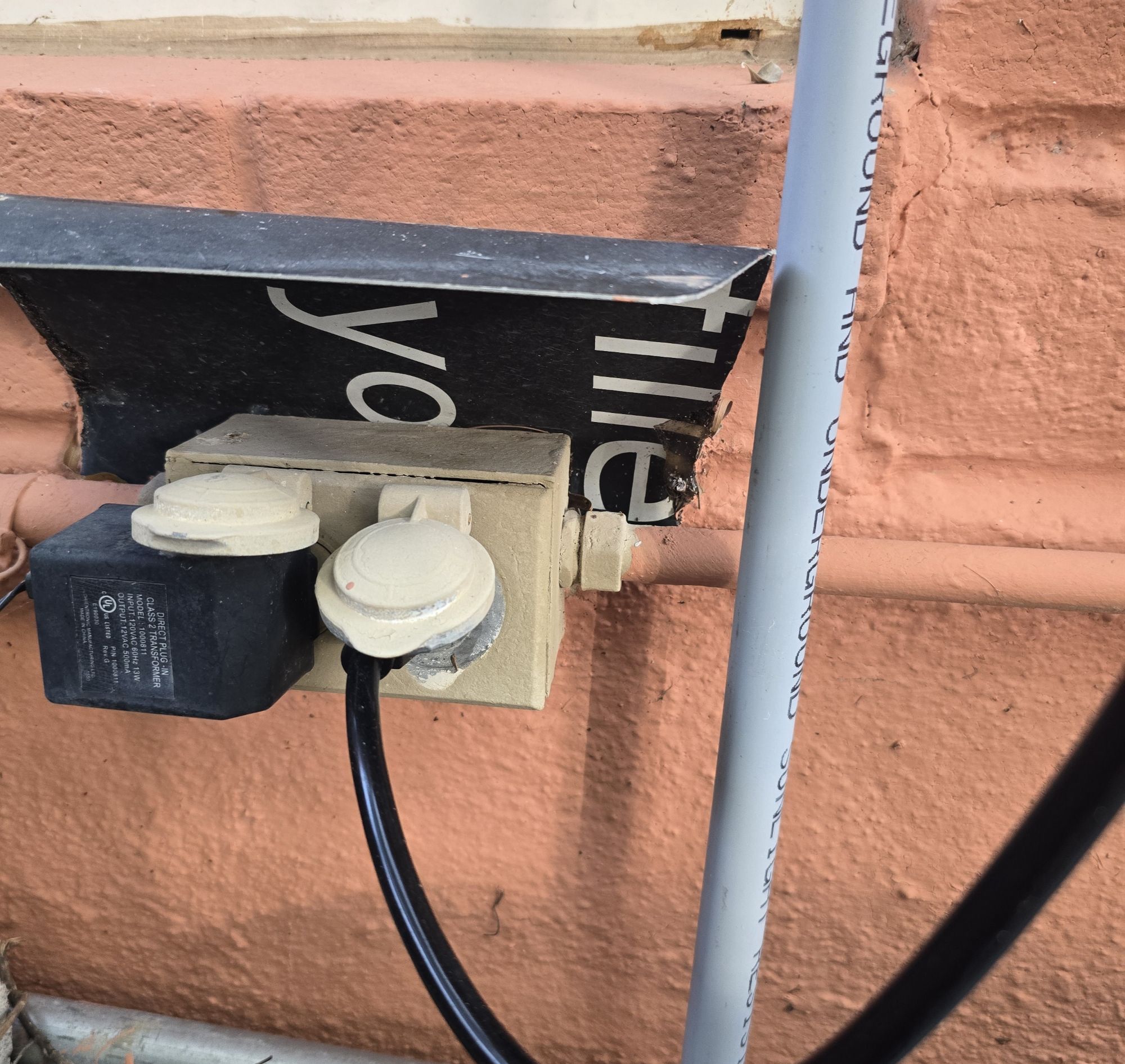
This is the one people skip and regret.
Projectors, inflatables, fog machines, and three hundred feet of string lights pull real power. Walk the exterior and count the outlets. Are they GFCI? Are they on the front of the house or all clustered by the patio? Then look at the electrical panel — age, amperage, whether it's a brand your inspector makes a face at.
Ask your inspector to speak specifically to exterior circuits and capacity. You're paying them anyway. This is also just good buying — the answer matters for EV charging, a future heat pump, or a workshop, none of which are Halloween.
5. Can you actually stake anything into the ground?
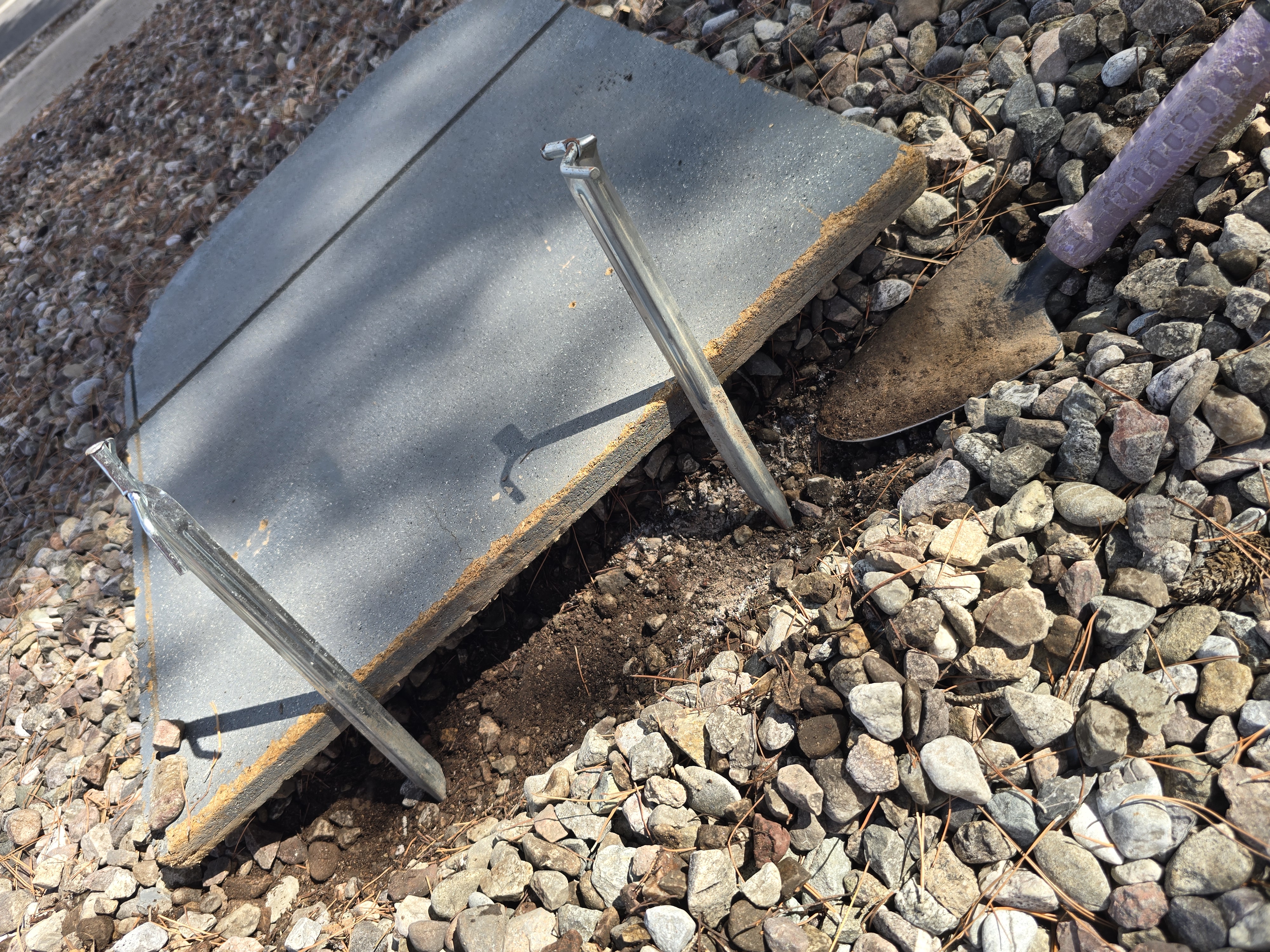
Tucson soil is not a neutral party. A lot of lots around here have caliche — a hardened calcium carbonate layer that turns "just push the tombstone stake in" into a forty-minute project involving a rock bar and some language you wouldn't use in front of your mother.
Look at what the yard is. Decomposed granite over landscape fabric? Your stakes go through the fabric, which you'll be annoyed about. Solid hardscape? Everything has to be freestanding and weighted. Actual planting beds? You're in good shape.
I fight this every single year, so here's what I've worked out:
Clear, soak, wait. Push the landscape rock aside where the stake is going until you're down to actual dirt. Fill that little depression with the hose and then walk away. Let it absorb — this is the step people skip, and it's the whole thing. Dry caliche laughs at you. Damp caliche negotiates.
Make the hole with metal, then swap in the plastic. Those flimsy stakes that come packed with the tombstone or the projector are not going to survive contact with our dirt. Drive a heavy-duty metal stake in first to open the hole, pull it out, then slide the manufacturer's plastic stake into the hole you just made. Takes an extra minute per stake and saves you from snapping six of them and driving to the hardware store in a costume.
Or let the sky do it. If the weather witches smile on us and we get rain before decorating season, go out the day after and set your stakes then. The ground will never be more cooperative than it is the morning after a storm. Set the stakes, mark them, and come back for the actual props later.
One thing before you start swinging a hammer: know where your irrigation lines and low-voltage lighting wire run. Drip line and landscape lighting are usually buried shallow — inches, not feet — and a metal stake driven through a drip line in October is a leak you'll discover in July. Walk the yard with the system running once before you decorate, note where the lines go, and stake around them.
Plan on weighted bases for anything tall regardless, because October wind exists.
6. Where do twelve bins of Halloween live in July?
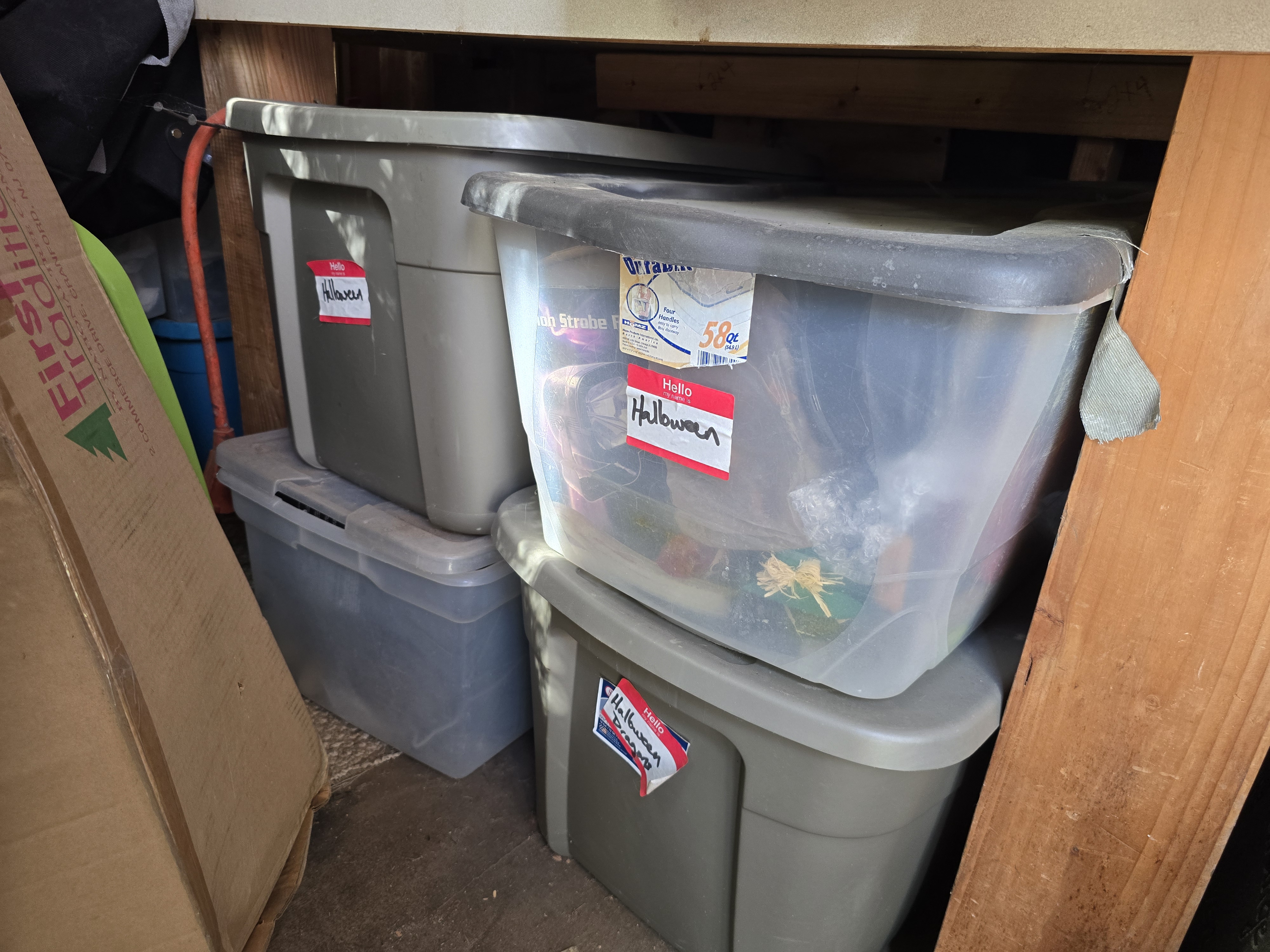
Storage is the least glamorous item on this list and the one that will determine whether you keep doing this.
Check the garage depth — is there room for shelving behind where the car actually parks? Is there a shed, and is it permitted? If the answer is "the attic," go look at the attic access and then think hard about what a Tucson attic does to latex, foam, and adhesive between May and September. My read is that heat-sensitive props don't belong up there, but I'm not a materials expert — ask someone who is before you store a $400 animatronic in a crawlspace that bakes all summer.
7. Read the CC&Rs. All of them. Before you waive.
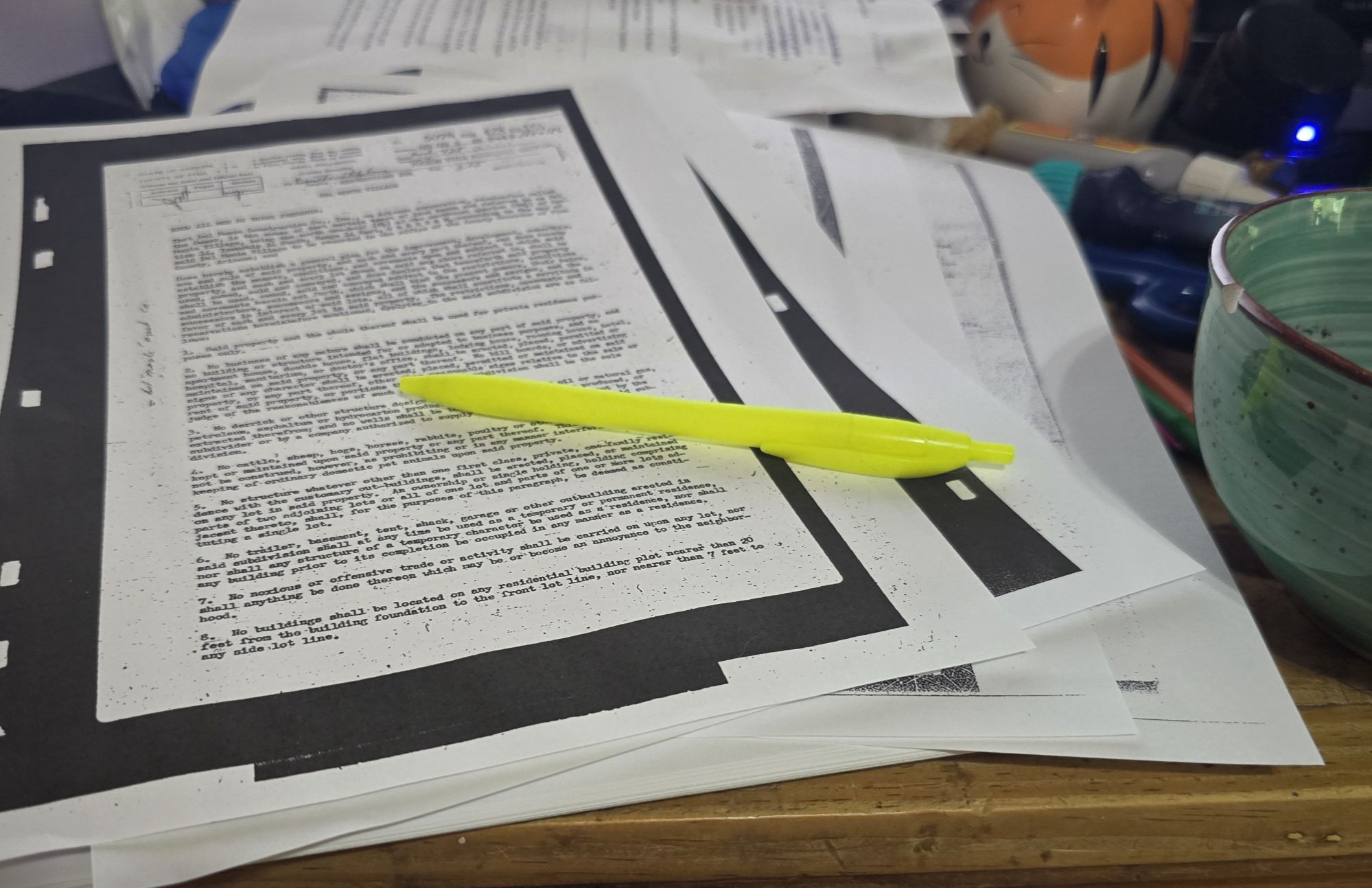
If there's an HOA, you get a window to review the governing documents. Use it.
Some CC&Rs restrict exterior decorations outright. Some set date windows — nothing up before October 15th, everything down by November 5th. Some ban inflatables, ground stakes, or anything projecting light toward the street. Some cap how many days a structure can stand in the front yard.
I've watched buyers waive that review because they were tired and the inspection period was closing. Don't. Whatever you plan to do with that house — Halloween, a casita, a fence, a work truck in the driveway — the answer is in a document you already have the right to read.
8. If you're hosting adults too, look at the flow
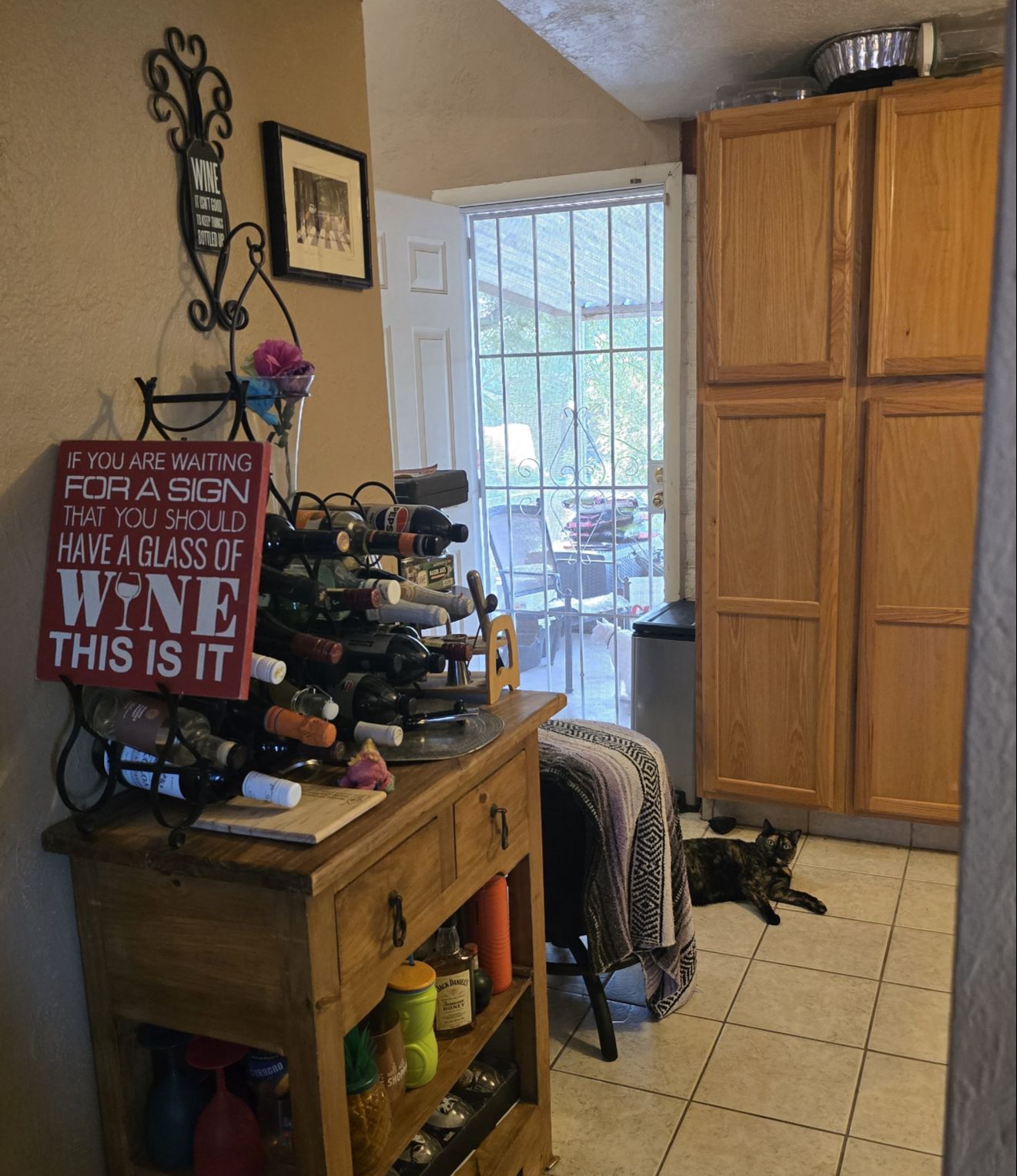
Where's the closest bathroom to the front door? Can people get from the kitchen to the yard without filing past your bedroom? Is there anywhere to put twenty coats? Where do fifteen cars park without your neighbor calling somebody?
Party flow and everyday-living flow are the same flow. A house that handles a crowd well handles a Tuesday well.
9. The block itself — and why I won't answer this one for you
Here's where I'm going to be straight with you, because I'd rather you hear it from me than wonder why I got weird.
You're going to want to ask me which Tucson neighborhoods have the best trick-or-treating. I can't answer that. Not "I don't know" — I'm not permitted to, and I wouldn't even if I could. Questions about which blocks have the most kids, the best crowd, the right feel are questions about who lives where, and steering buyers based on that is exactly the thing fair housing law exists to stop. Agents have done real harm with softer versions of that question. So I don't play.
What I will do is hand you the tools. Drive the block on a Friday evening. Drive it on Halloween night if you're shopping in the fall — nothing tells you more in twenty minutes. Talk to the people who live there. Check the CC&Rs. Look at the porch lights.
You can also do some of this from your couch. Search the subdivision or street name in Facebook groups and scroll back to last October. People post photos of their setups, ask where the trunk-or-treat is, complain about running out of candy by eight.
Not all groups are created equal, so read the About page and the rules before you post. If the rules reflect the kind of neighbor you want to be, ask your question there. If they don't, you just learned something without having to ask anything.
You're allowed to choose your block on any basis you like. I'm the one with the license, so I stay in my lane, and you get to go find out for yourself.
10. Salt the doorways
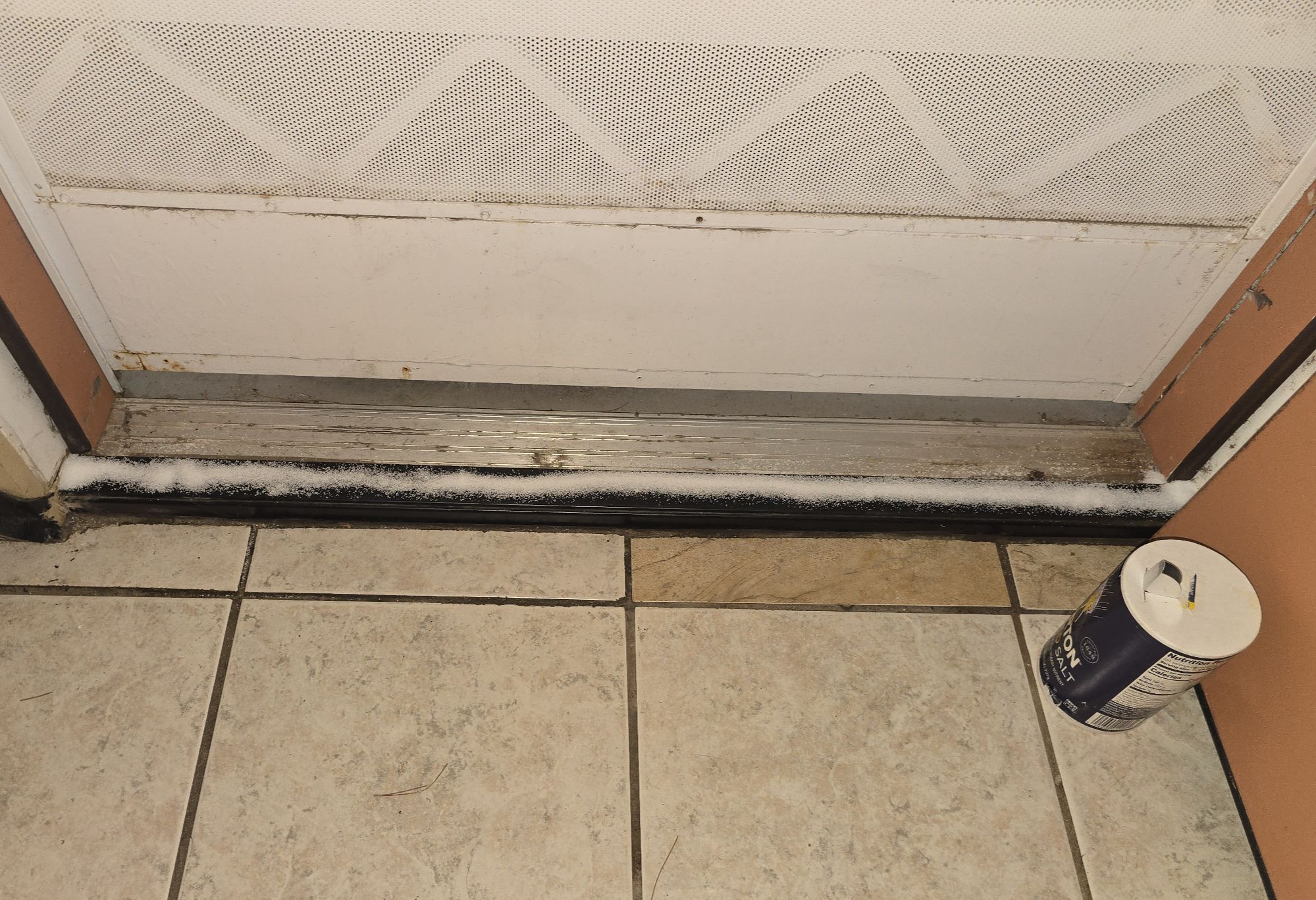
Not because it does anything. Because it's funny, and because the people who get it will know they found the right person.
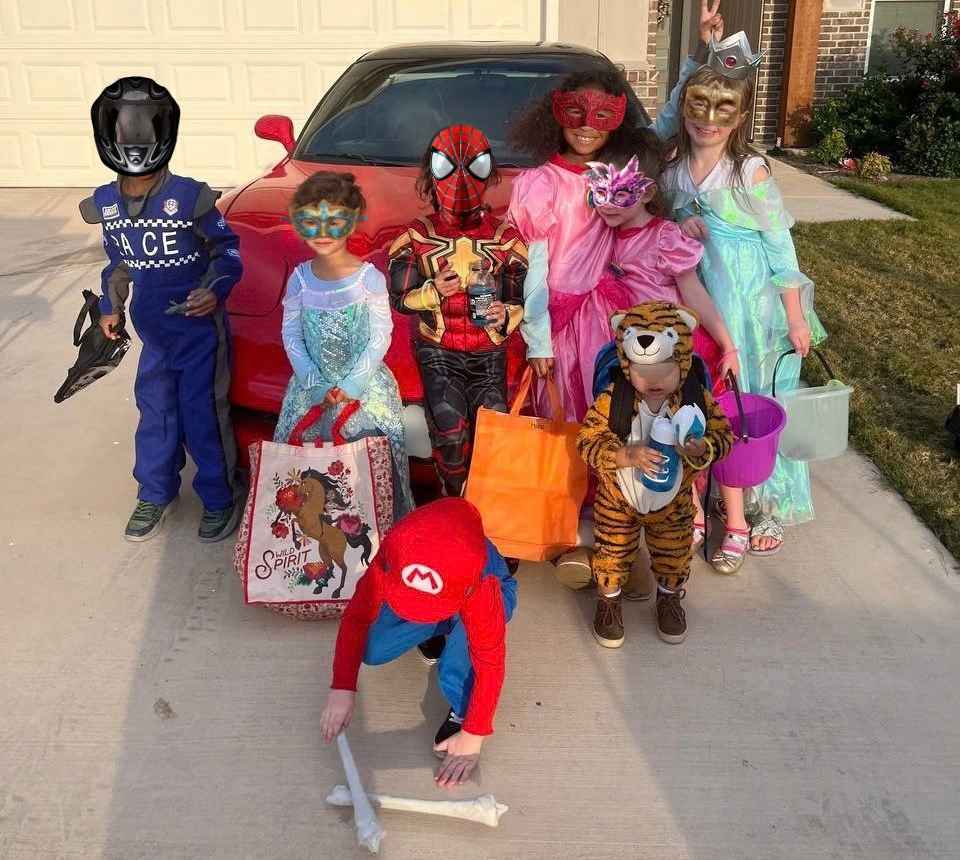
The real point underneath all of this: the Halloween house isn't the one with the biggest animatronic. It's the one where everybody who shows up gets treated like they showed up.
The tired new parents pushing a stroller with a six-month-old in a Super Mario costume who has no idea what's happening. The toddlers in Avengers gear, one of whom is crying about the mask. The kids in the elaborate homemade thing you can't identify and have to compliment carefully. The teenagers in Purge masks and hoodies at 8:45, the ones people love to complain about, who are out doing something harmless in public instead of any of the alternatives.
All of them get candy. Every single one.
That's the whole trick. Not the fog machine, not the projector, not the twelve-foot skeleton. Just a porch light on and a person who's glad you came. Do that for a few years running and you won't have to call yourself the Halloween Monarch of the neighborhood — the block will have already handed you the crown.
So buy the house that lets you be that. Then hand out the full-size bars, because you're not a monster.
Come as you are, leave with the keys.
Categories
Recent Posts








Broker Associate Brokers License BR677408000
+1(520) 971-2832 | jennifer@mysteryhouserealestate.com