La Madera, Tucson: The Midtown Neighborhood That Did the Right Thing
La Madera, Tucson: The Midtown Neighborhood That Did the Right Thing
A little pocket of midtown near Glenn Street, a park at its heart, and homeowners who decided some old paperwork didn't get to stay.
I just helped a friend — a real one, the kind you'd help move on a July afternoon in Tucson — buy a house in La Madera, and I've been quietly hooked on the neighborhood ever since. Fair warning: I'm not exactly unbiased here. I just think it's worth knowing about.
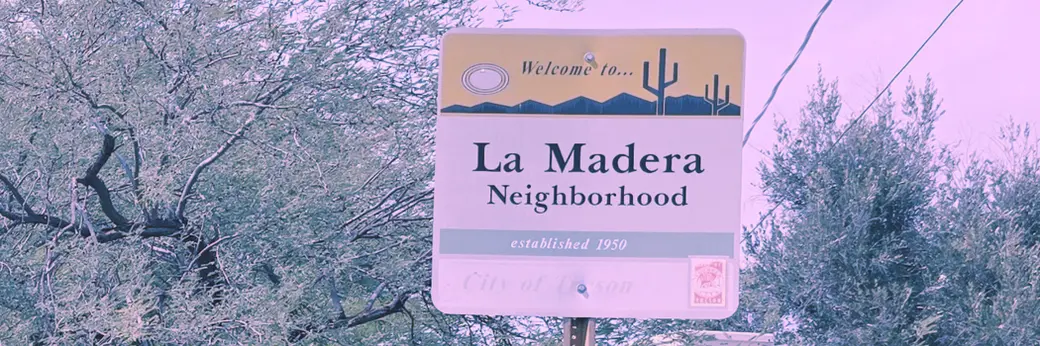
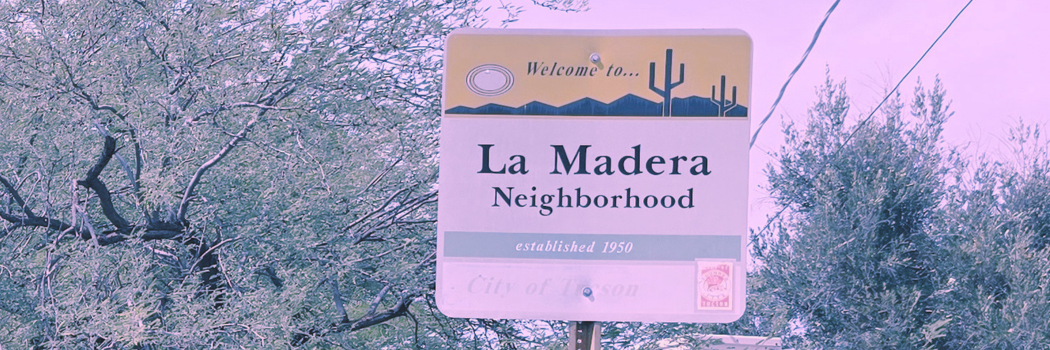
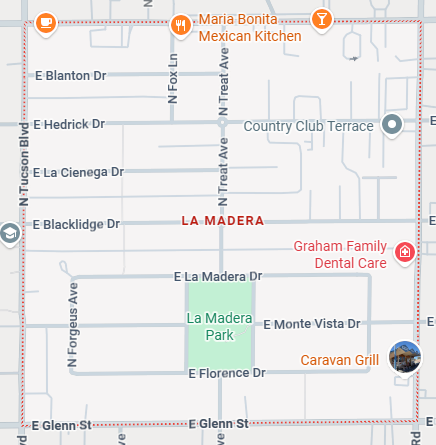
La Madera sits in midtown, running from Fort Lowell down to Glenn, and from Tucson Boulevard over to Country Club. It's small — somewhere around 1,500 people — and most of them own their homes and actually stick around. You feel that when you walk it.
What makes it special
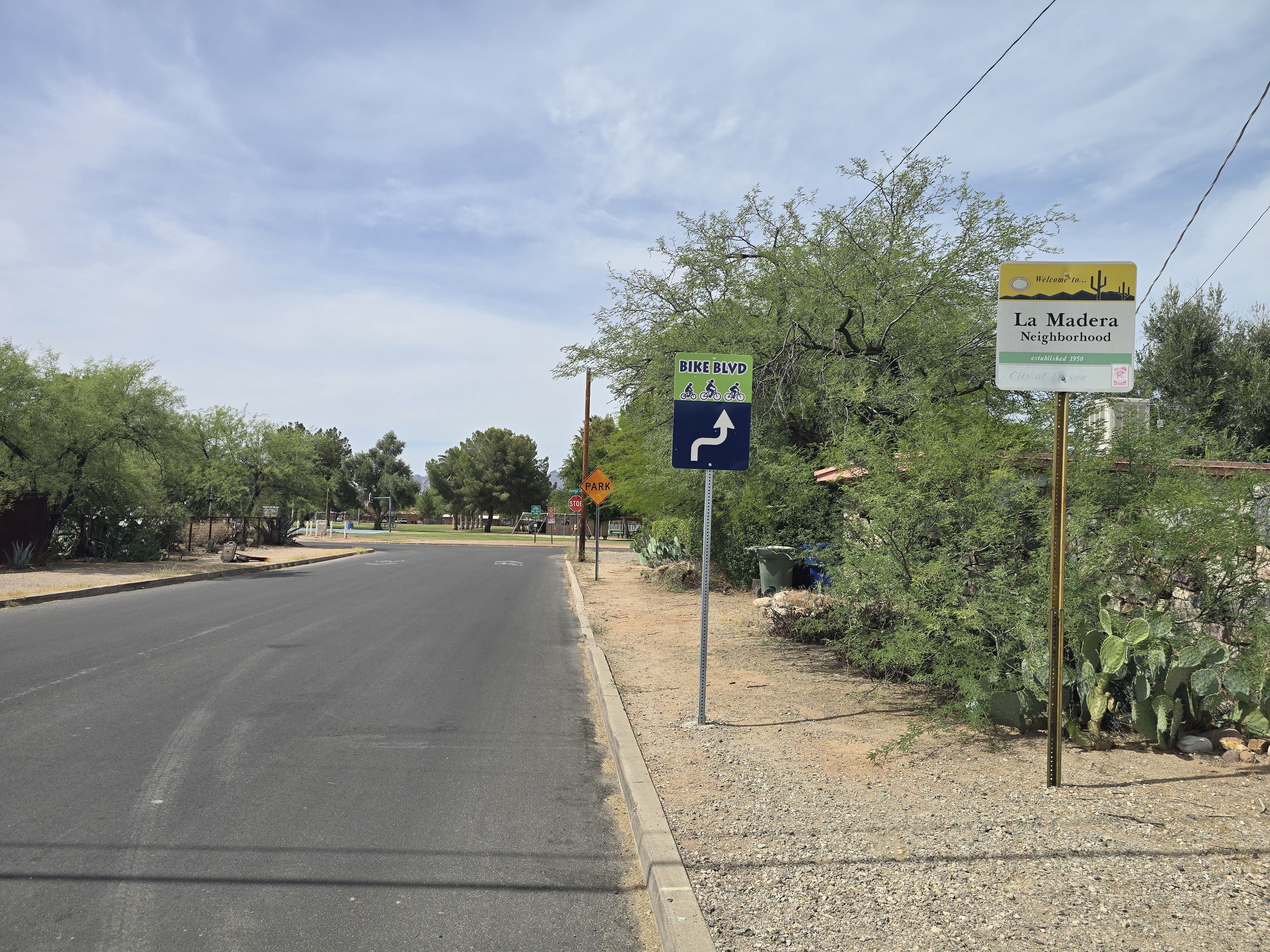
The houses are mostly solid mid-century builds from the 1940s and '50s — real character, real bones — with newer construction mixed in. And Treat Avenue runs right up the middle as a designated bike boulevard: a calmed, low-traffic street painted with sharrows and marked with "Bike Blvd" signs, where bikes get priority and a kid can actually pedal to the park without you white-knuckling the whole way. In a city built mostly around cars, a street built around people on bikes is a real quality-of-life perk.
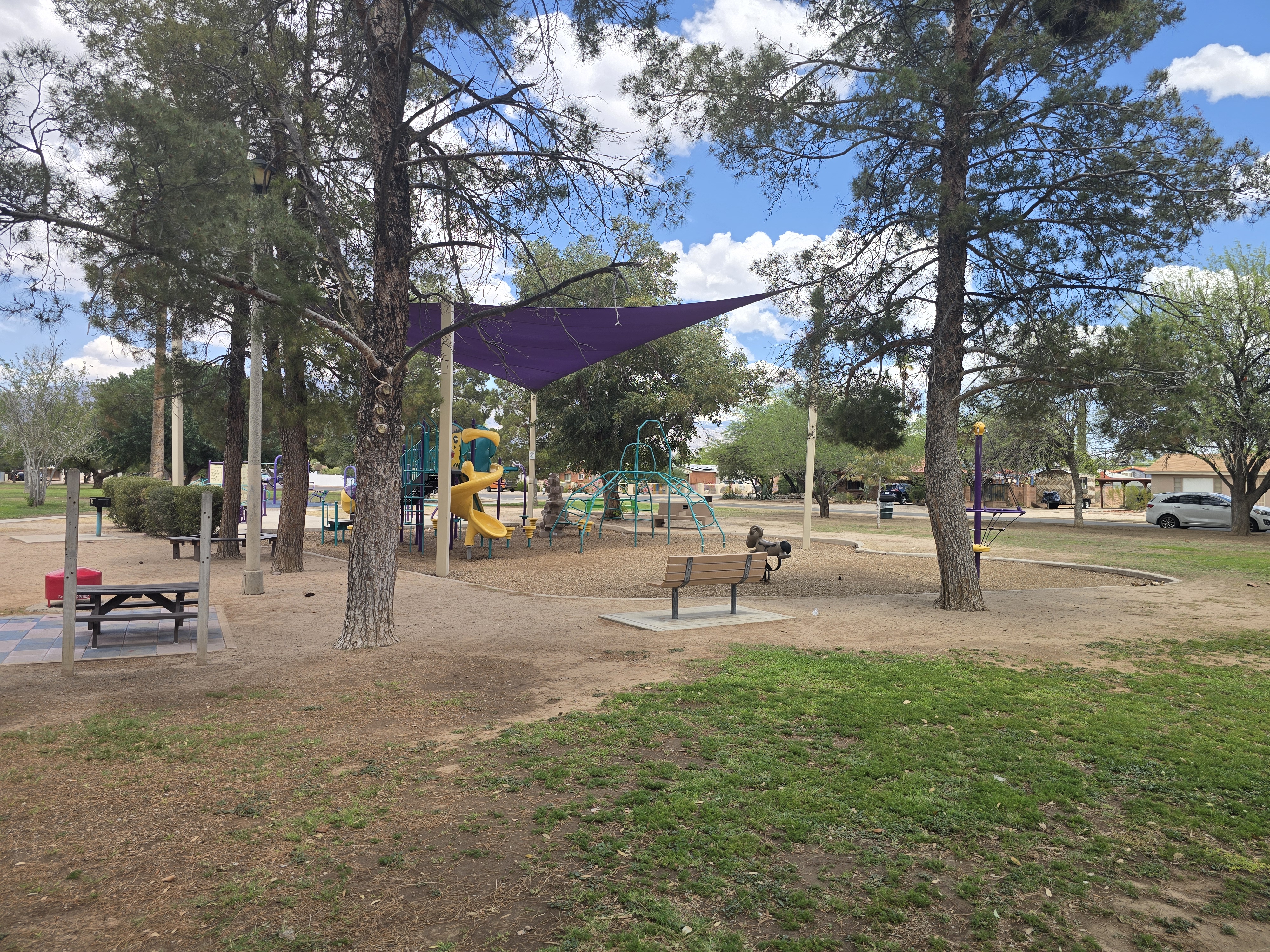
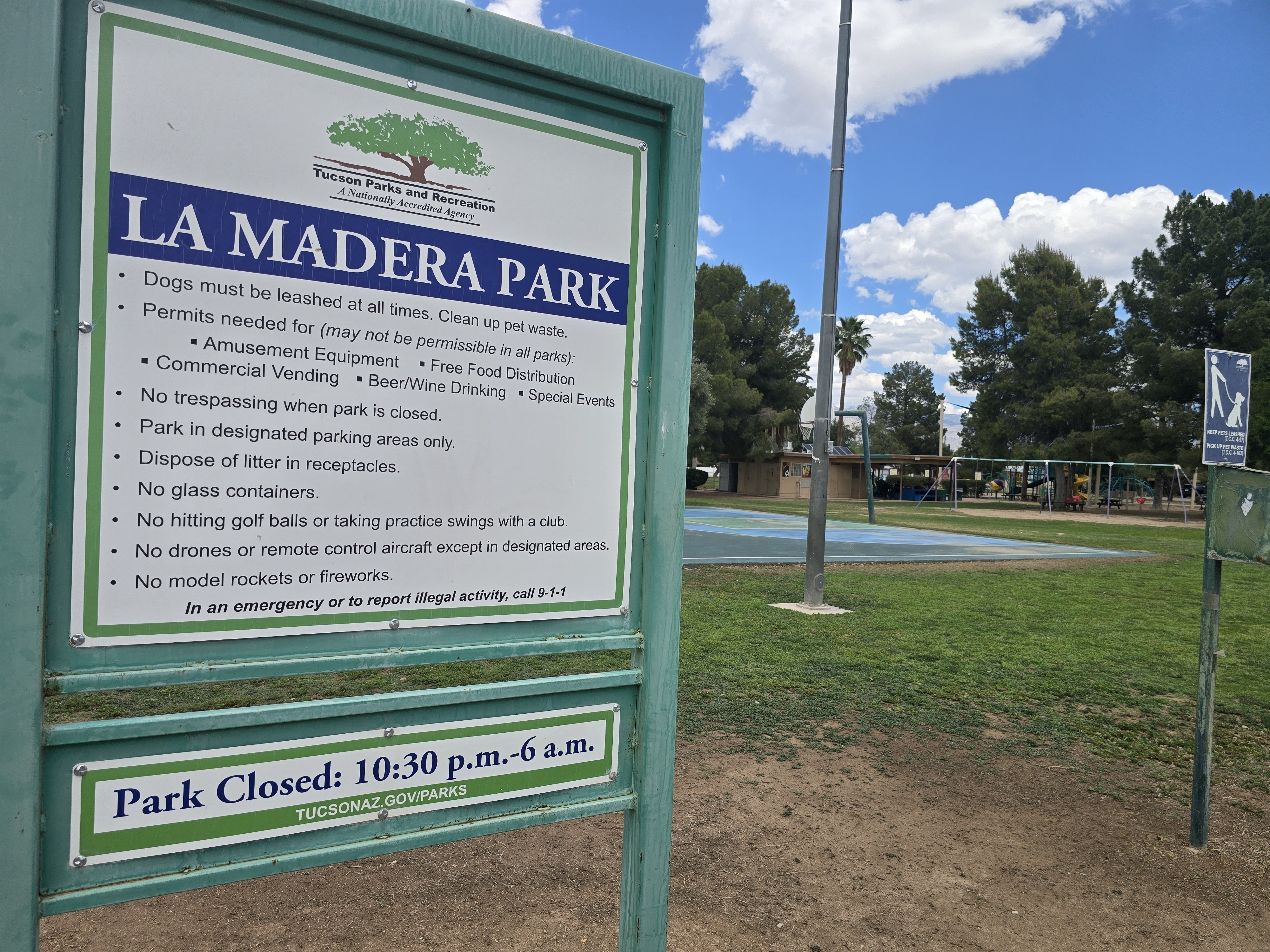
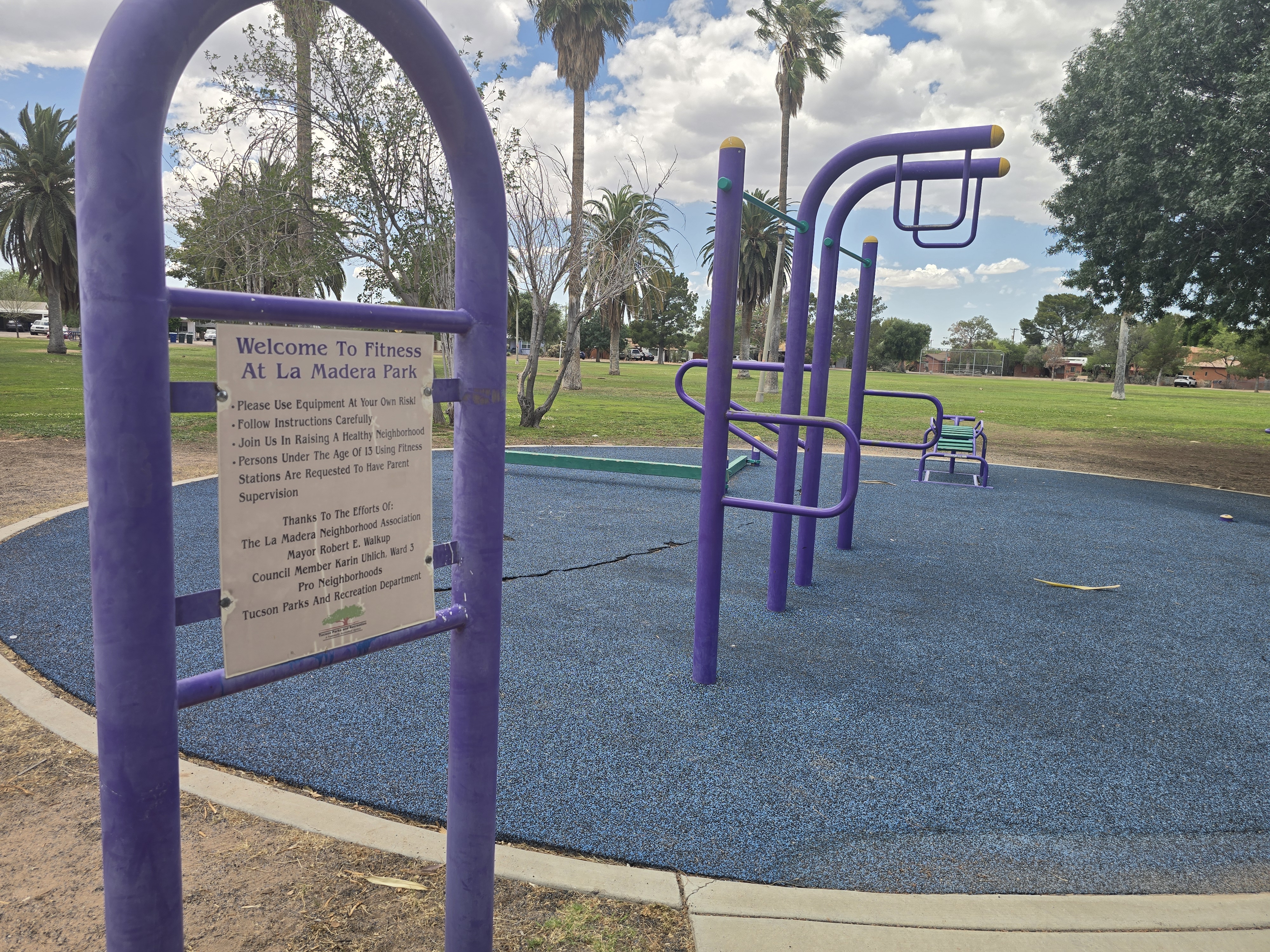
And the park is the heart of it. La Madera Park has a big playground shaded by sail canopies — slides, a climbing dome, swings — plus picnic tables, a ramada, and a basketball court. There's even an outdoor LifeTrail fitness circuit: low-impact stations built for everyday, functional movement and friendly to folks well past their gym-rat years. A plaque on it credits the neighborhood association for making it happen, which tells you something about how this place looks after itself. It's the kind of park where you start recognizing the same dogs week to week.
And it's positioned almost annoyingly well. The Fort Lowell corridor along the northern edge has become a genuinely good little food and coffee stretch: Seven Cups for tea, plus Gallery of Food, Maria Bonita, and Danny's Baboquivari nearby. There are small, locally owned markets — Aqua Vita, Caravan Mideastern Foods, Carniceria Aguajito — within an easy walk. The University and downtown are both a short hop away. Come December, half the neighborhood walks over to Winterhaven for the lights, and Cyclovia rolls right through.
It's the rare midtown neighborhood that feels both connected and quiet. You're in the middle of everything and somehow still on a calm street with a park down the block.
The quietly badass part
Here's the thing I keep coming back to. Like a lot of Tucson neighborhoods platted in the first half of the last century, the founding documents around here carried covenant language restricting who could own a home based on race — in La Madera Addition's case, a declaration recorded back in 1946. That language has been illegal and unenforceable since the federal Fair Housing Act of 1968 — but "unenforceable" doesn't mean "gone." For decades it just sat there, on the books, showing up in title work, doing nothing but reminding people of an ugly chapter.
A few years ago, Arizona passed a law that finally made it straightforward for neighbors to strike that language and file the correction with the county. The University of Arizona's Mapping Racist Covenants Project had already done the painstaking work of finding it — more than a quarter of the 750-plus subdivisions they reviewed had it. And one by one, midtown neighborhoods started cleaning house.
Here in La Madera, that's started happening — not as one big neighborhood vote, but the way these things often go: one household at a time. Under that law, an owner can record an amendment that strikes the unlawful language out of that 1946 declaration as it applies to their own property, and several neighbors here have done exactly that over the past year, each filing their own. It changes nothing legally; the 1968 act handled that part. What it changes is the record — parcel by parcel, the paperwork that governs this place gets a little cleaner. It's people looking at something broken and deciding it doesn't get to sit quietly in the chain of title anymore. That's less a legal act than a values act, and it tells you a fair amount about the kind of people who live here.
Why this matters to how I work
I read the documents. All of them — the CC&Rs, the title commitment, the fine print most people are told to just sign. I'm not the agent who hands you a deed with that kind of language buried in it and calls it boilerplate. Everybody deserves to feel like they belong on their own street, full stop, and part of my job is making sure nothing in the paperwork quietly says otherwise.
So yeah — I'm a little smitten with La Madera. Partly the park and the bike boulevard and the tea. Mostly the people who looked at something broken and fixed it because it was the right thing to do.
If you're thinking about buying or selling in midtown — La Madera or anywhere near it — I'd love to talk it through with you. No pressure, no five "just checking in" emails. Just real answers.
Come as you are, leave with the keys.
Jennifer Winchester is a REALTOR® and Associate Broker with Mystery House Real Estate in Tucson, serving buyers and sellers across Pima County. Saving people, finding houses — kind of the family business. Reach her at jennifer@mysteryhouserealestate.com or mysteryhouserealestate.com.
Categories
Recent Posts



Broker Associate Brokers License BR677408000
+1(520) 971-2832 | jennifer@mysteryhouserealestate.com